The Notch! It is one of the most polarising “feature” in current gen smartphones. Many people find it to be more immersive that phones will a regular layout and small bezels, while others find it to be the complete opposite, and obstruction of sorts, and they prefer phones with thin bezels but no notch. Smartphone manufacturers have already implemented the notch into their core smartphone lines, like OnePlus with the OnePlus 6, Oppo with the F9 in its F series phones and the R15 in the R lineup, Xiaomi with the Redmi 6 in the Redmi series, Vivo with the V9 in its V series, LG with the G7 in its flagship G series, Huawei with the P20 in its P series and many more. Some of them have also started using the notch as the USP of many of their budget and mid-range devices. Whatever your stand may be on this whole notch situation, the one thing we can agree upon is that the notch is to be embraced now.
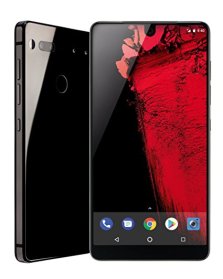
The whole notch situation started with the launch of the Essential Phone back in May 2017. This was the debut phone by Essential, a new company headed by Andy Rubin, co-founder of Android. In this original implementation, the notch was small and only wrapped around the front camera which was placed at the center of the top edge of the phone. In my opinion, this is probably the best implementation of the notch. The only problem was that even though it had extremely small side bezels, it had an ugly chin and that paired with the then relatively new and abrupt notch with a sharp curve summed up to be an asymmetrical mess.
Then, like many trends, Apple came along and popularised the idea of the notch with the 2017 flagship, the iPhone X. It flaunted a huge black bar at the top of the screen, that housed the tech for its Touch ID replacement, Face ID. The notch contained within it an IR camera, the dot projector, a proximity sensor, the ambient light sensor, the front camera, a microphone, and a speaker.

Face ID is more secure than any other face unlock technology and offers double the security as that offered by Touch ID. For all the tech that went into Face ID, and for the optimization by Apple to support the notch, and the fact that except this notch the iPhone X has practically no other bezels, Apple did a good job implementing the notch. But at the time, this one single feature led to massive outrage amongst the tech community.
Fast forward to 2018 and we see a major portion of the Android market saturated by notches. Some look better than others, but phones with big notches just seem to be considering the notch to be a style statement and not a functional feature. Sporting nothing but the
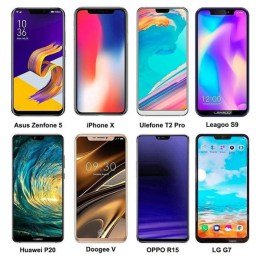
camera, the ambient sensor, and the speaker, these unnecessary notches on phones make it look like the manufacturers are missing the whole point of the necessity of the notch. While some notches are bigger than others, none have the necessity of being as big as they are. Even with the additional feature of being able to black out the bars at the top, it seems like a lazy redesign attempt from a lot of these manufacturers, especially from anyone with a phone sporting a notch equal or bigger in size compared to the iPhone X.
Today we’re in the middle of a shift of smartphone design to one without bezels. Gadgets that look like a block of glass aren’t decades away but are already under development. While this technology is highly experimental and is being pioneered by companies like Vivo with the Vivo Nex and Oppo through its Find X, other manufacturers are also working on similar phones offer almost no bezel.
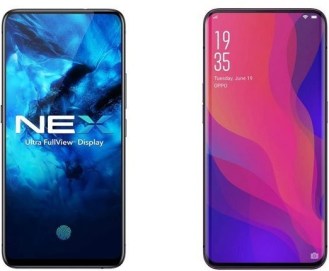
But to achieve that, there has to some place where we move sensors on the front of our screens. We could either put it in elevating cameras like the Nex and the Find X, but any moving part in a phone is not a good sign for its durability. Thus, in this “grey area” period of transition, some manufacturers have decided that the notch is the way to go.
The latest development in this notch scenario is what is being called the “Tear Drop” notch or the “Crown Jewel” notch, with an implementation similar to that of the Essential Phone.
Just like in any other market, it’s also a numbers game. The notch is the simplest solution to get a phone to a screen-to-body ratio of over 85%. Couple that with the high popularity that this feature has gotten in the past months, I believe its safe to say that the notch is here to stay, at least till the time screen display technology advances to a point where we can add all the required sensors under the display. Till then, we’re just going to have to bear the notch. If it makes you feel any better, just think that by embracing the notch, you are helping push towards a bezel-less future. Feel any better? Me neither.
 ZETA BYTE